
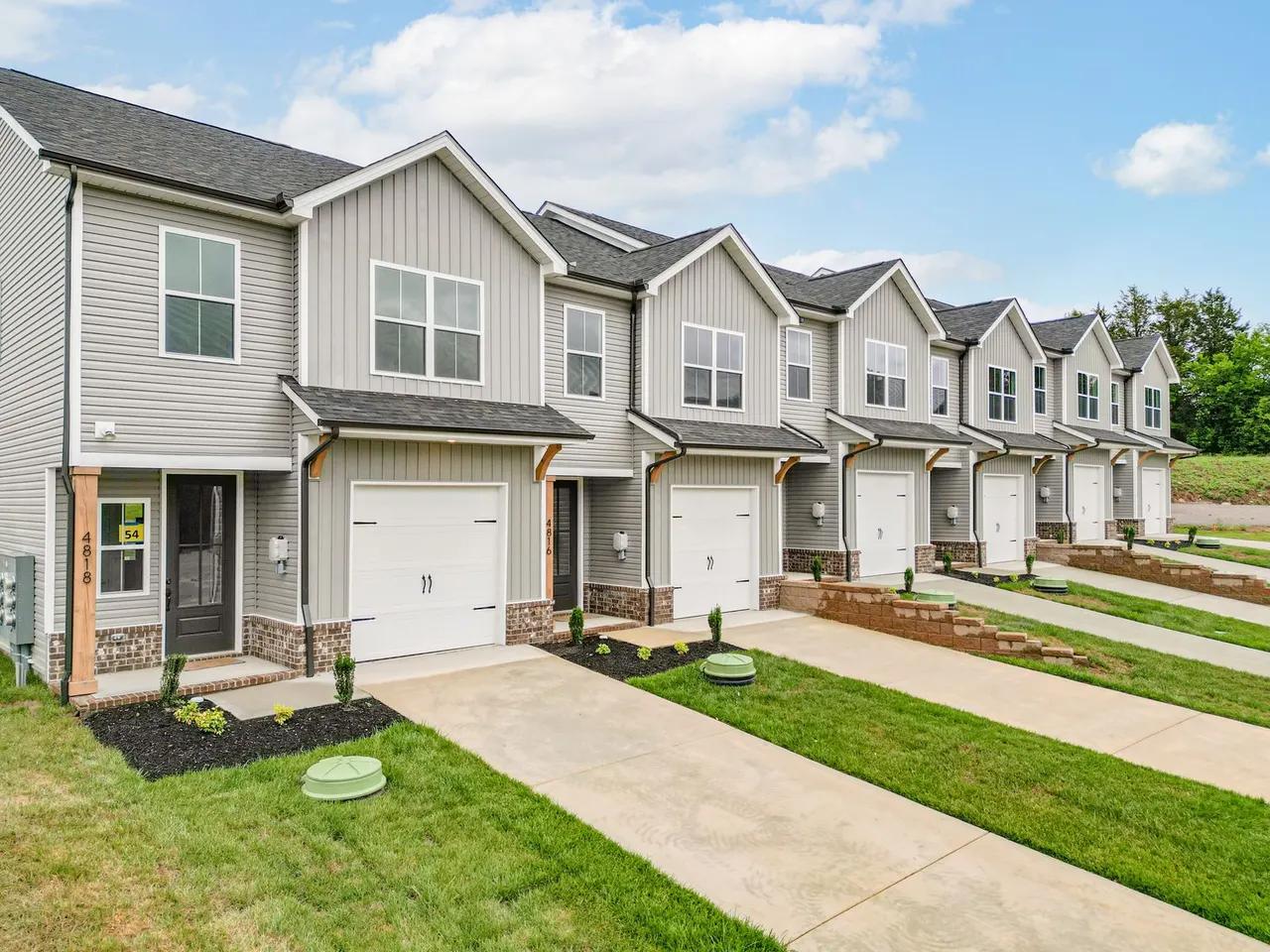
- The short answer for 2026
- Renting vs. buying in Knoxville: the monthly math
- The upfront cash gap most people forget
- “Isn't renting just throwing money away?”
- When does buying actually win?
- Why Knoxville tilts the math
- Programs that shrink the down payment
- The full closing-cost breakdown
- Who should rent, who should buy
- The new-construction rental middle path
- How we calculated these numbers
- Frequently asked questions
- Editorial disclosure
- Sources referenced
- Ready to see a new-construction rental in person?
The short answer for 2026
In Knoxville today, renting a new home costs a little less each month than buying a comparable one - and only a small fraction of the cash to get in the door. Buying still builds equity, so it wins if you stay long enough. For anyone unsure they will be here five-plus years, renting is both cheaper and lower-risk. The break-even point where buying finally pulls ahead is roughly four to six years if prices keep rising 3 to 4 percent a year, and longer if they do not.
If you are still deciding on the city itself, read our guide for families moving to Knoxville from out of state first.
Two 2026 conditions drive it. First, the typical Knoxville home value sits around $371,000 (Zillow Home Value Index, summer 2026), with the city's median sale price near $317,000 (Redfin, three months ending May 2026). Knoxville is still roughly 10% below the national median, but values have close to doubled in a decade as remote workers, University of Tennessee growth, and Great Smoky Mountains demand discovered the market. Second, 30-year fixed mortgage rates are around 7.28% (Freddie Mac Primary Mortgage Market Survey, October 1, 2026), which keeps monthly ownership costs high even where home prices remain reasonable.
Renting vs. buying in Knoxville: the monthly math
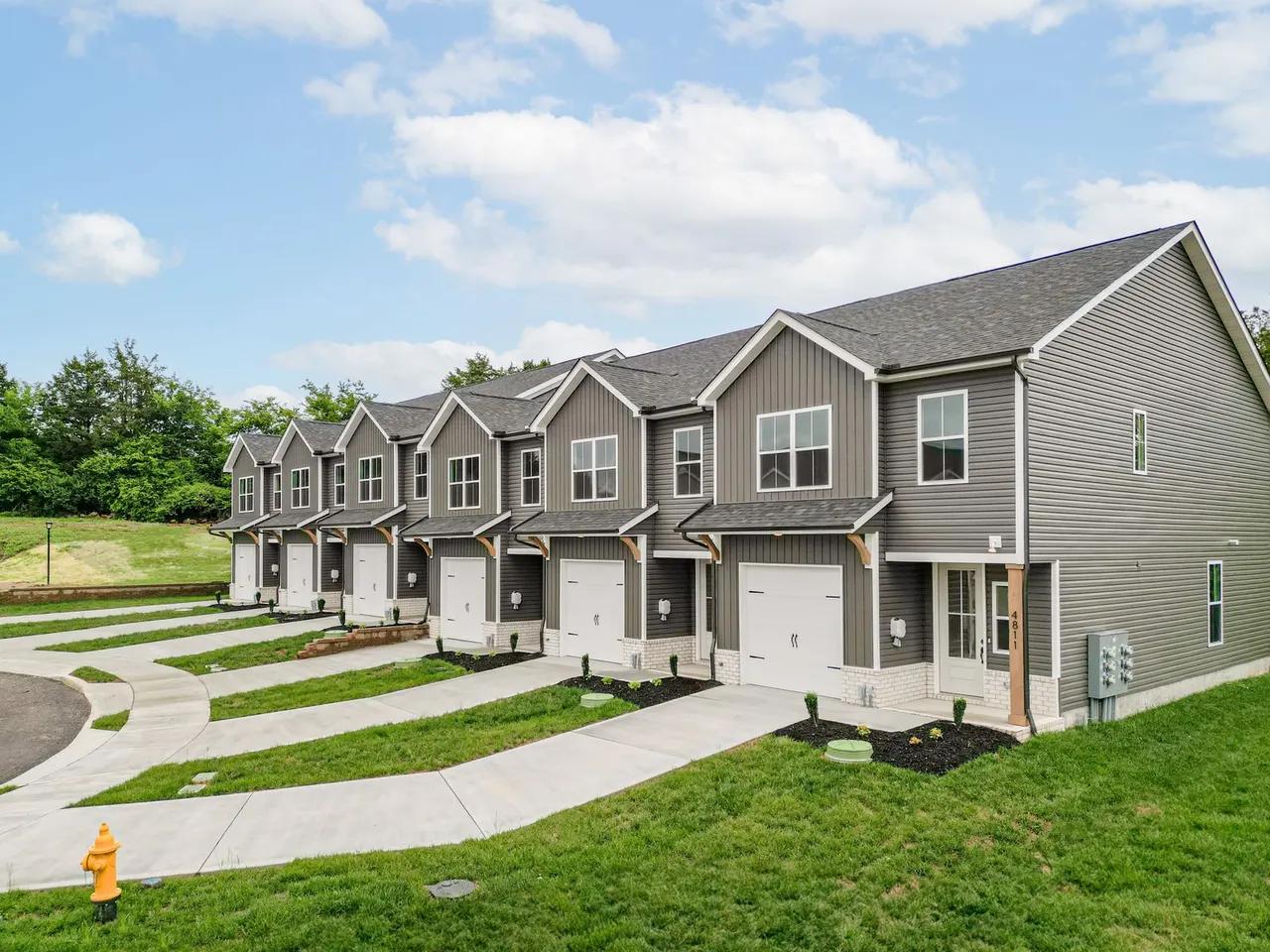
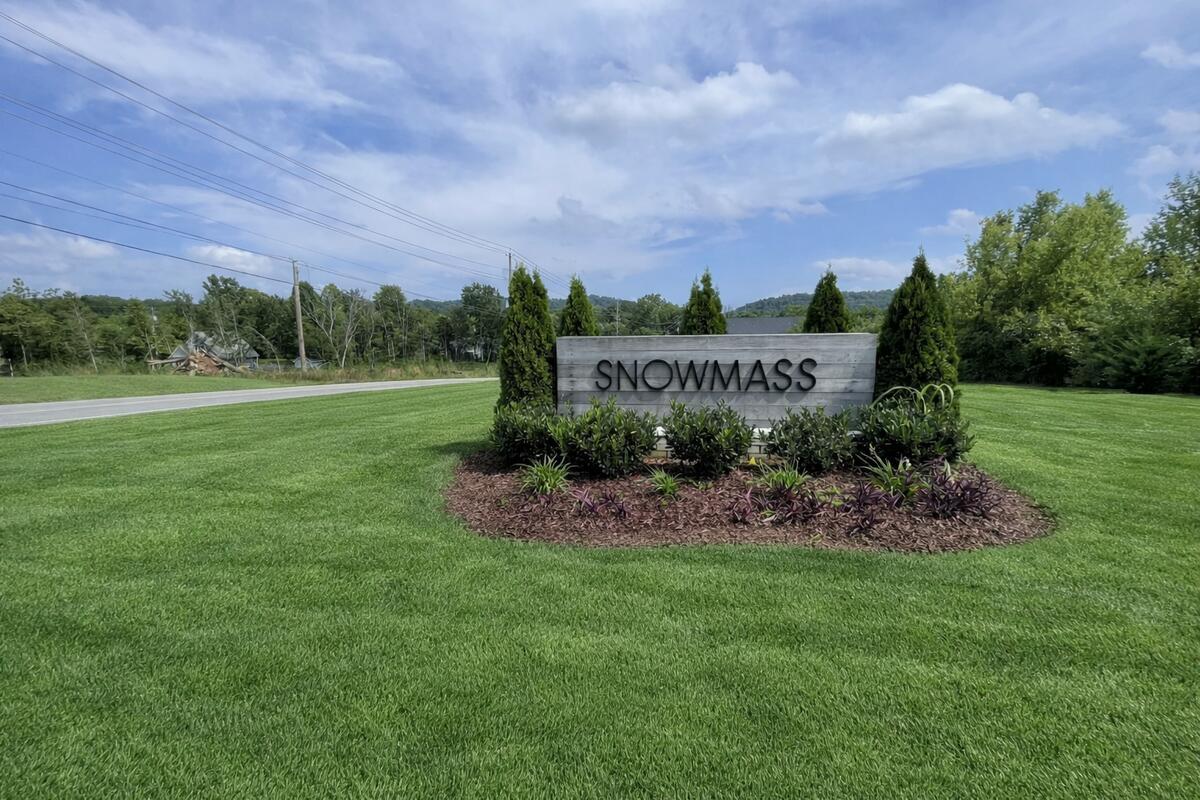
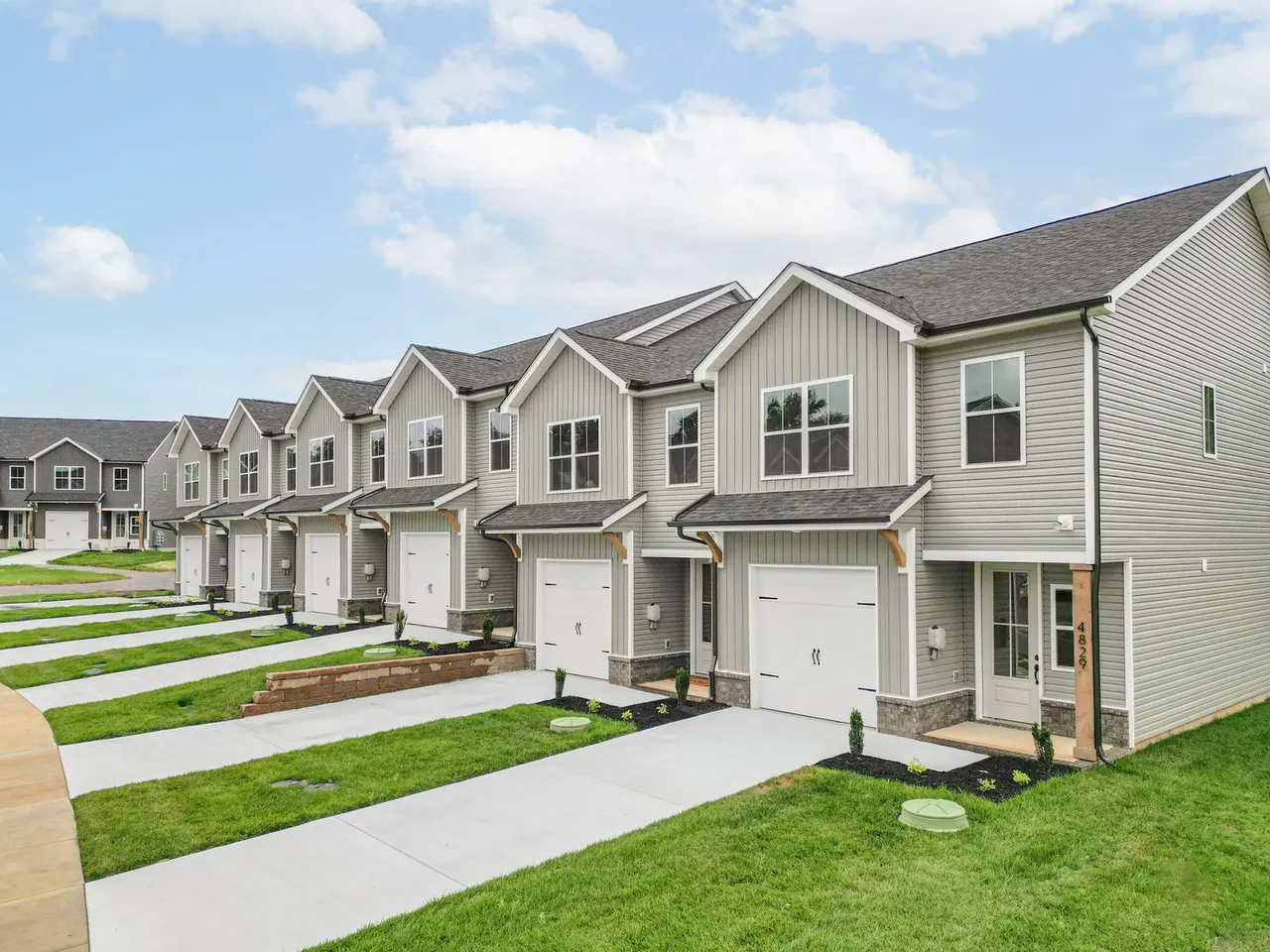
Here is the full picture for the same-quality home - what it costs to get in the door, what it costs each month, and what actually leaves your pocket in the first year: renting a new 3-bedroom townhome (like Snowmass, from $2,095/month) versus buying a comparable new townhome that sells for about $300,000, with 10% down at 7.28%.
| Rent a new townhome | Buy a ~$300,000 townhome | |
|---|---|---|
| Getting in the door | ||
| Cash needed to move in | ~$4,200 | ~$37,500 |
| Every month | ||
| Base rent / principal & interest | $2,095 | ~$1,847 |
| Property tax | Included in rent | ~$97 |
| Homeowners / renters insurance | ~$15 | ~$120 |
| PMI (under 20% down) | None | ~$113 |
| HOA dues | None | ~$120 |
| Maintenance & repairs | $0, included | ~$150 + repairs |
| Monthly total | ~$2,110 | ~$2,447 |
| First year, all in | ||
| Total cash out of pocket | ~$25,300 | ~$66,900 |
Illustrative, for a same-quality new 3-bedroom townhome. Rent reflects Snowmass at $2,095/month; the buy column prices a comparable new townhome at about $300,000 (new Knoxville townhomes start near $280,000). Buying's first-year outlay is higher, but about $32,600 of it becomes home equity you recover when you sell, minus 9-10% selling costs. Rent is fully spent apart from a refundable deposit. Assumes 10% down, a 7.28% 30-year fixed rate, a security deposit equal to one month of rent, and typical townhome HOA dues; property tax uses the Knox County effective rate for residential property. Tennessee has no state income tax on wages.
Same home, but renting costs about $340 less every month - and buying asks for roughly 9 times more cash to get in the door: ~$37,500 versus ~$4,200. Add it up and buying runs about $41,500 more out of pocket in the first year. That is the real trade-off: buying builds equity if you stay put, while renting keeps roughly $33,000 in your pocket today.
The upfront cash gap most people forget
This is where renting and buying separate sharply. To rent a new home, you typically need first month's rent plus a deposit - roughly $4,200 on a $2,095 home - and you are moved in. To buy a $300,000 townhome, you need about $37,500 in cash before you get the keys: roughly $30,000 for a 10% down payment plus about $7,500 in closing costs (lender fees, title, escrow, and prepaids). That capital is now locked in the house. It is not earning interest, it is not available for an emergency, and you only get it back - minus selling costs - when you sell. For a household still building savings or new to East Tennessee, that gap - $4,200 versus $37,500 - is the entire decision.
“Isn't renting just throwing money away?”
It is the most common objection to renting, and it is only half true. Yes, rent does not build equity. But a large share of an early mortgage payment does not build equity either. In the first years of a 7.28% loan, most of every payment goes to interest, property tax, insurance, and PMI - none of which you get back. Add the repairs an owner covers and the roughly 9-10% you will spend buying and then selling, and “throwing money away” describes both paths; the only questions are how much, and for how long. Renting also buys something real: flexibility, a fixed monthly cost, and zero exposure to a surprise $9,000 HVAC replacement. Money spent on the right housing for your situation is not wasted - it is the cost of not being locked into the wrong one.
When does buying actually win?
The break-even rule
Buying builds equity, and equity is real money. But buying and selling a home costs roughly 9-10% of the price in round-trip transaction costs - closing costs going in, agent commissions and fees coming out. On a $300,000 home, that is about $27,000-$30,000 you have to earn back through appreciation and loan paydown before ownership breaks even against renting. If Knoxville prices rise about 3 to 4 percent a year, mortgage paydown plus appreciation earns that back in roughly four to six years; if growth stays near 2 percent, it takes closer to ten. The principle is simple: stay under three years and renting almost always wins; stay seven to ten years or more and buying usually does; the middle depends on how fast prices rise. And rates matter less than people assume - you can refinance a rate later, but you cannot refinance the price you paid or the years you waited.
Why Knoxville tilts the math
Two local factors push Knoxville's break-even earlier than in a high-cost metro. Tennessee has no state income tax on wages (the Hall Tax on investment income was fully repealed in 2021), which raises take-home pay and buying power for relocating households. And Knox County's effective property tax rate is roughly 0.37% (SmartAsset), about a third of the national rate. Practically: a $300,000 home carries about $1,165 per year in county property tax - roughly $97 per month - among the lowest carrying costs of any mid-sized metro in the country.
Cutting the other way: Knoxville's appreciation has cooled from its post-2020 surge to the low single digits (0.5-5.5% depending on the reporting source and time window). You cannot count on fast price growth to shorten the break-even the way buyers did five years ago. The result is a market where buying is reasonable if you will genuinely stay put - and renting is the smarter cash-flow move if you will not.
Programs that shrink the down payment
Before you decide the ~$37,500 cash gap is a dealbreaker, check whether you qualify for one of Tennessee's first-time-buyer programs. Any of these can meaningfully lower what you actually need at closing.
THDA Great Choice Plus (Tennessee Housing Development Agency). The state's flagship program pairs a Great Choice 30-year fixed mortgage with down-payment assistance. Two flavors: a deferred $6,000 second mortgage at 0% interest, forgiven after 10 years if you stay in the home; or an amortizing second mortgage up to 5% of the sale price (capped at $15,000). Requirements: 640 minimum credit score, a THDA-approved lender, completion of a homebuyer education course (typically $50-$100), and household income under the county's THDA cap. First-time buyer status is defined as not having owned a primary residence in the last three years, and is waived for veterans with an honorable discharge or purchases in a designated targeted area.
FHA (3.5% down). Insured by the Federal Housing Administration. Lower credit score threshold than conventional, but you carry mortgage insurance for the life of the loan unless you eventually refinance to conventional. Common pick for first-time buyers who cannot swing 10-20% down.
VA (0% down). For eligible active-duty military, veterans, and select surviving spouses. No down payment, no PMI, and typically lower rates than conventional. If you qualify, this is almost always the strongest program.
USDA (0% down). For homes in USDA-designated rural areas. Portions of the outer Knox County map and adjacent counties (Union, Grainger, and parts of Anderson) qualify. Income limits apply.
Stacking THDA down-payment assistance on top of an FHA or conventional Great Choice loan is the most common path renters use to bridge the cash gap. Even so, closing costs alone still run $7,000-$8,000 on a $300,000 townhome, so “zero down” almost never means “zero cash.”
The full closing-cost breakdown
Closing costs are the line item most first-time buyers underestimate. On a $300,000 Knoxville purchase with 10% down, expect roughly $7,500-$8,000 broken down like this:
- Lender fees: $1,200-$2,000 (origination, underwriting, application, credit report, wire fees)
- Title services and title insurance: $1,400-$1,800 (owner's policy, lender's policy, settlement, endorsements)
- Appraisal: $550-$700
- Home inspection: $400-$550 (paid before closing but often lumped with closing budget)
- Prepaids and escrow reserves: $2,000-$3,000 (first-year homeowners insurance, several months of property tax reserves, interest per diem)
- Recording fees and Tennessee mortgage tax: $400-$700
Sellers pay their own set of costs at exit - roughly 6% agent commissions plus another 1-3% in seller-paid closing fees, title, and prorations. That is the “other side” of the 9-10% round-trip figure quoted throughout this article.
Who should rent, who should buy
Rent if you:
- Aren't certain you will stay in Knoxville five or more years
- Are new to the area and still learning which corridor fits - Halls, Hardin Valley, Farragut, Maryville, or Oak Ridge
- Don't have roughly $37,000 in cash you are comfortable locking up
- Want a fixed, predictable housing cost with no surprise repair bills
- Value the ability to relocate on short notice for a job, family, or lifestyle change
Buy if you:
- Plan to stay seven years or more
- Have the down payment saved and an emergency fund on top of it
- Want to lock in a home and build equity, and can absorb a roof or HVAC replacement without stress
- Qualify for THDA or VA benefits that shrink the cash-to-close gap
The new-construction rental middle path
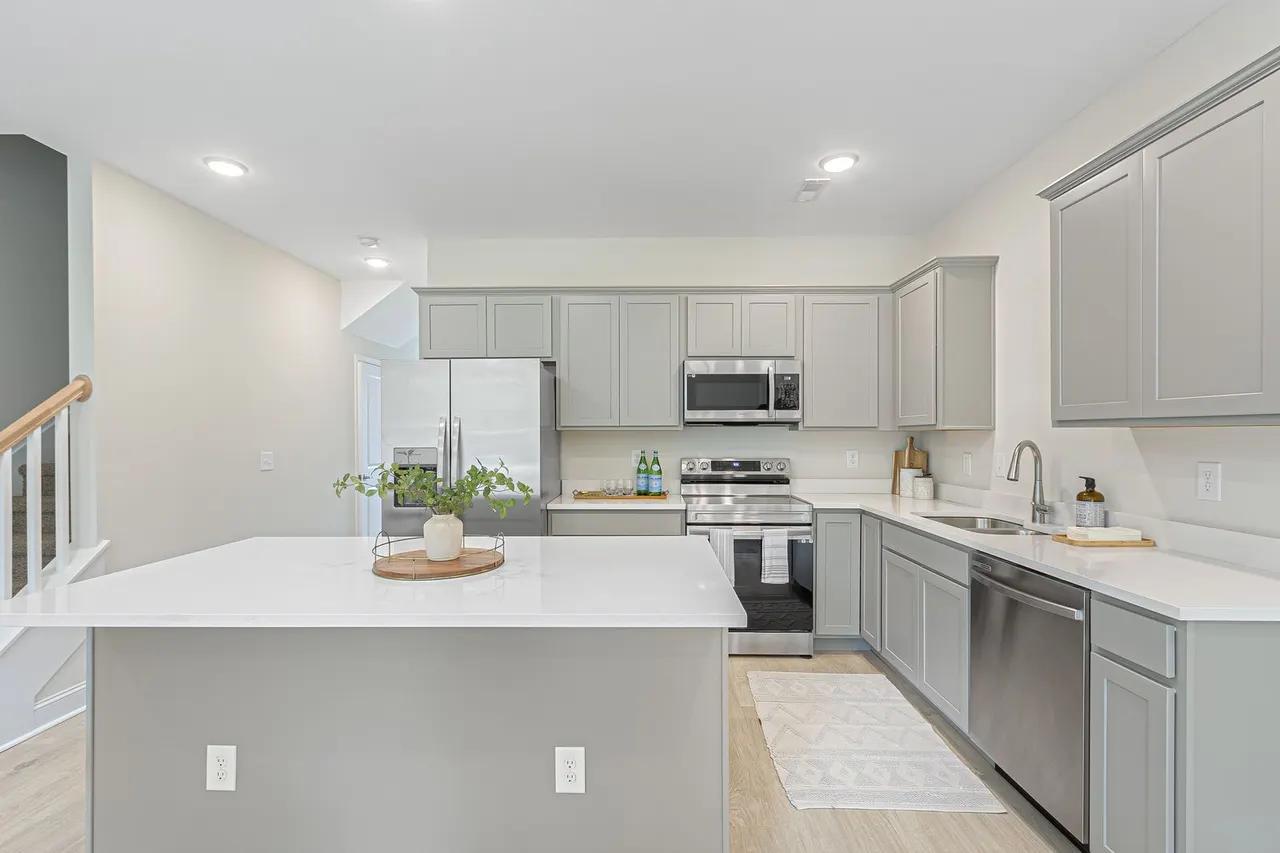
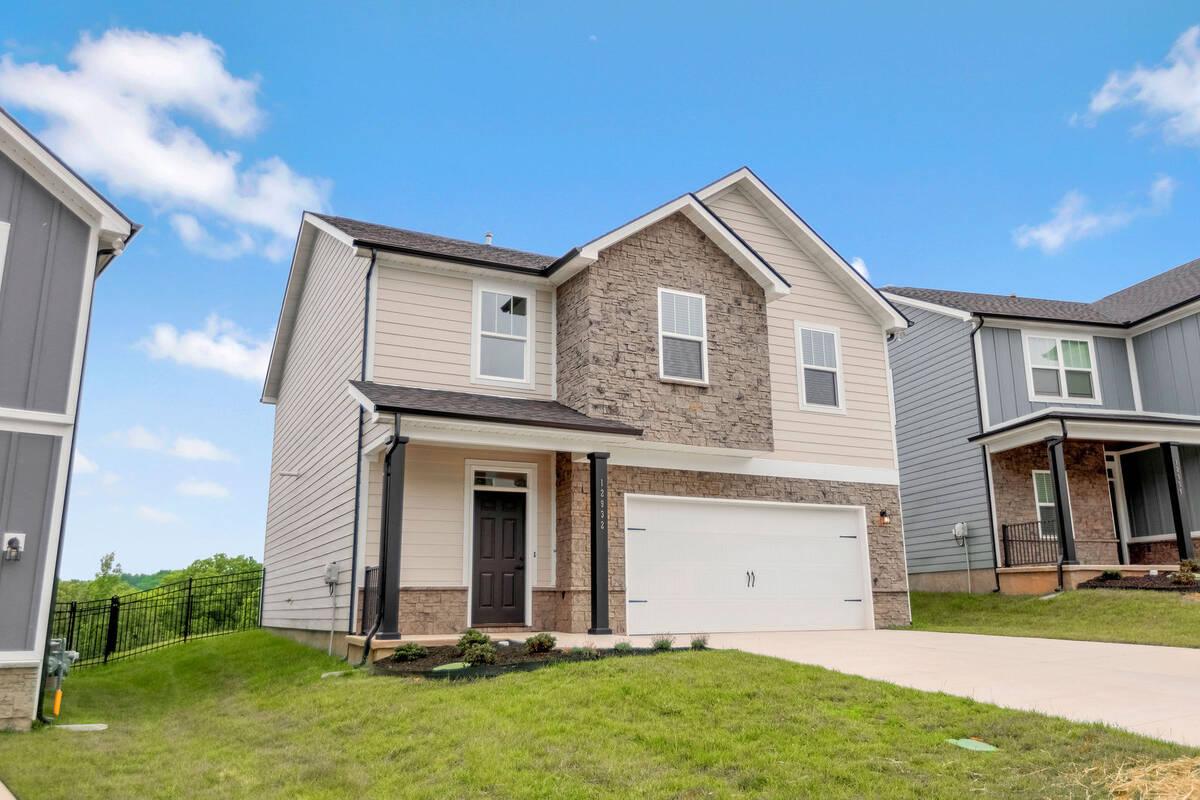
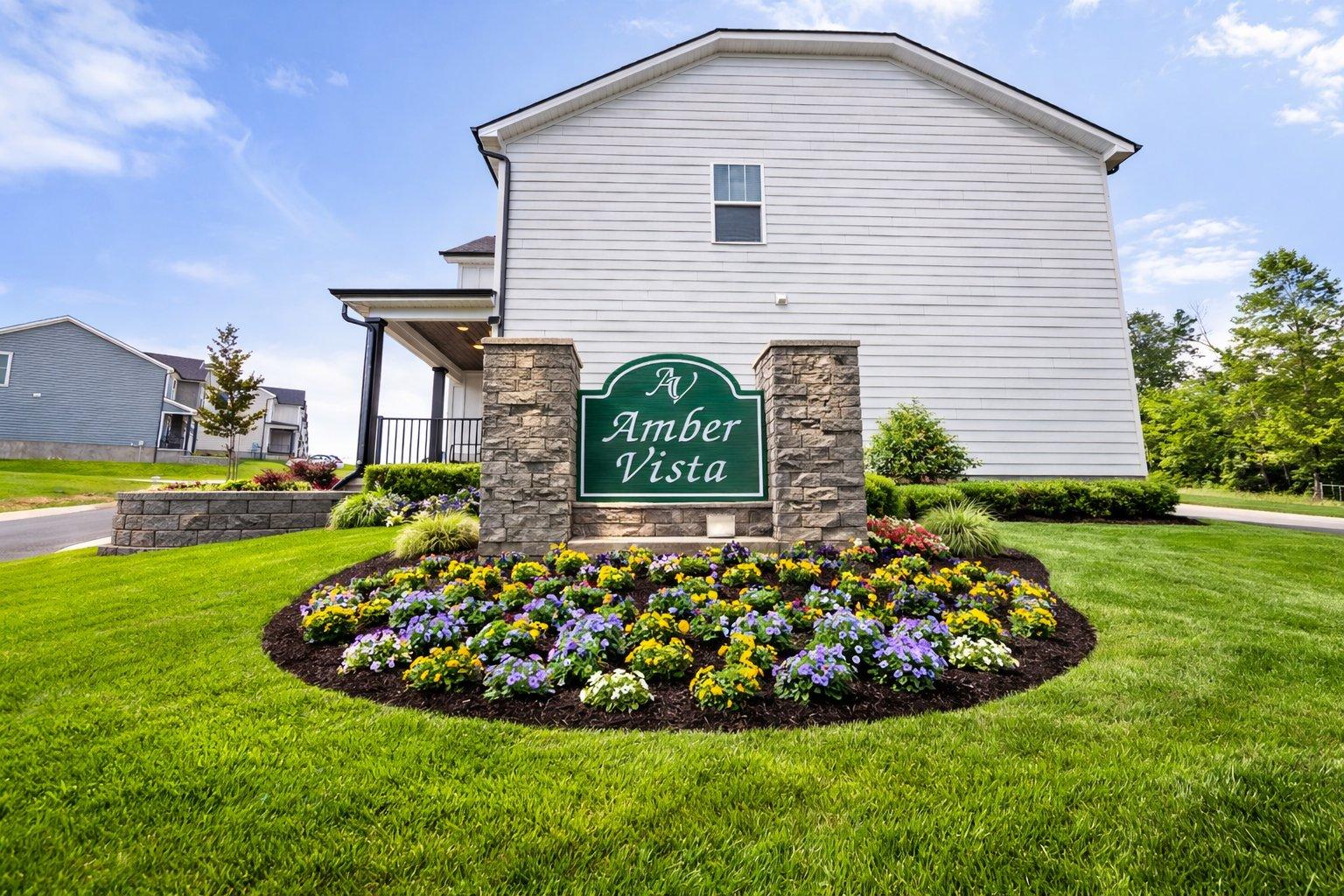
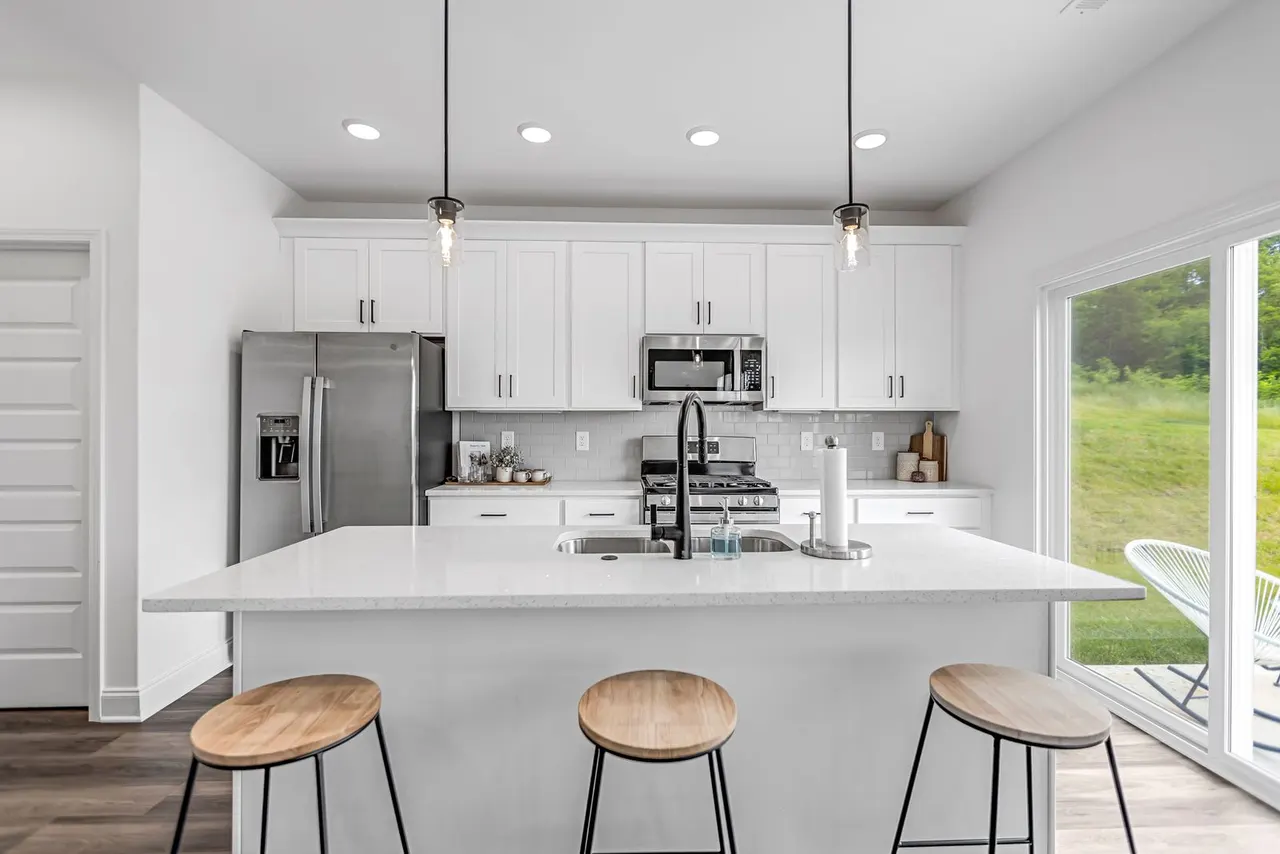
There is a reason “rent vs. buy” is not strictly rent-old versus buy-new anymore. A new-construction rental gives you the parts of ownership people actually want - a brand-new home, modern finishes, a garage, a real neighborhood - without the down payment, the closing costs, or the repair risk. Right Time Homes builds exactly this across the Knoxville area: brand-new townhomes and single-family homes for rent, full maintenance included on every lease, starting from $2,095/month at Snowmass in the Halls corridor, with single-family options like Amber Vista in Hardin Valley, West Knoxville, and Mockingbird Meadows in Halls. It is the way to live in a new home now while you keep your cash liquid and decide, on your own timeline, whether Knoxville is where you buy.
Rent to own is the other middle path people ask about: it locks in a purchase price but puts a nonrefundable option fee and a monthly rent premium at risk if you do not buy. Our guide to how rent to own homes work and what they cost in Knoxville runs the numbers.
How we calculated these numbers
Every figure in this article is either sourced from a named agency (Freddie Mac, Zillow, Redfin, SmartAsset, THDA) or derived by the arithmetic below. This section exists so you can reproduce the math with your own inputs.
- Monthly principal and interest ($1,847): $300,000 sale price minus 10% down = $270,000 loan. At the Freddie Mac PMMS 30-year fixed rate of 7.28% (October 1, 2026), a fully amortizing payment is approximately $1,847.
- Property tax ($97/month): Knox County residential property is assessed at 25% of appraised market value. $300,000 × 25% = $75,000 assessed. County rate for the 2025-2026 tax year is $1.5540 per $100 of assessed value: $75,000 × 0.015540 = $1,165 per year, or roughly $97 per month. (Homes inside the Knoxville city limits pay an additional municipal rate; the $97 figure assumes a location within Knox County but outside city limits, matching most of the Snowmass, Amber Vista, and Mockingbird Meadows footprints.)
- PMI ($113/month): With less than 20% down on a conventional loan, private mortgage insurance runs roughly 0.5% of the loan balance per year. $270,000 × 0.005 ÷ 12 = $113/month.
- Homeowners insurance ($120/month): Statewide Tennessee average is $1,300-$1,600 per year for a $300,000 dwelling; we used $1,440 for the estimate. Renters insurance is estimated at $180 per year.
- HOA dues ($120/month): Typical for a Knoxville-area townhome community with landscaping and common-area upkeep.
- Maintenance ($150/month + repairs): Standard rule of thumb is 1% of home value per year for a new build. $300,000 ÷ 100 ÷ 12 = $250/month. We used the more conservative $150 estimate because most components in new construction are still under warranty for the first year.
- Break-even (about 4-6 years at 3-4% appreciation): Round-trip transaction costs on a $300,000 home run $27,000-$30,000 (9-10%). At 7.28%, loan amortization returns roughly $2,600-$3,500 of principal per year in the first five years; appreciation at 2-4% per year adds another $6,000-$12,000 per year in equity. Weighed against renting's ~$340 monthly savings and the ~$33,000 a renter keeps invested, buying pulls ahead in about four to six years at 3-4% appreciation and closer to ten years at 2%.
Frequently asked questions
Is it cheaper to rent or buy in Knoxville in 2026?
Renting is cheaper on both counts right now. A new 3-bedroom townhome rents for about $2,110/month all-in, versus roughly $2,447/month to own a comparable $300,000 townhome. Renting needs only about $4,200 to move in, versus ~$37,500 to buy. Buying still builds equity, so it wins if you stay past the break-even point: about four to six years at 3 to 4 percent annual appreciation.
How much do you need upfront to buy a home in Knoxville?
On a $300,000 townhome with 10% down, plan on roughly $37,500 before move-in: about $30,000 for the down payment plus around $7,500-$8,000 in closing costs. Renting the same-quality new home typically requires only first month plus a deposit, around $4,200. THDA down-payment assistance and VA/USDA zero-down programs can reduce the cash-to-close gap for buyers who qualify.
Isn't renting just throwing money away?
Not really. Rent does not build equity, but in the early years of a mortgage most of the payment goes to interest, taxes, insurance, and PMI that you never get back either - plus repairs and the roughly 10% cost of buying and selling. Renting buys flexibility, a fixed cost, and no repair risk, which for a short or uncertain stay is money well spent.
How long do you have to stay in a home for buying to be worth it in Knoxville?
About four to six years if prices rise 3 to 4 percent a year, and closer to ten if they rise only about 2 percent. That is how long it takes appreciation and loan paydown to cover the 9-10% round-trip cost of buying and selling. Under three years, renting almost always wins; past seven to ten years, buying usually does.
What are mortgage rates in Knoxville right now?
The national 30-year fixed rate is 7.28% as of October 1, 2026 according to the Freddie Mac Primary Mortgage Market Survey. Your actual rate depends on your credit score, down payment, loan program, and lender. Government-backed loans (FHA, VA, USDA) sometimes carry lower headline rates than conventional; talk to a THDA-approved lender to see what you qualify for.
Does Tennessee offer first-time homebuyer help?
Yes. The Tennessee Housing Development Agency's Great Choice Home Loan pairs a 30-year fixed-rate mortgage with down-payment assistance of either $6,000 (deferred, forgivable after 10 years) or up to 5% of the sale price (amortizing, capped at $15,000). Minimum 640 credit score, first-time buyer status (waived for veterans and targeted areas), and completion of an approved homebuyer education course are required.
How did the 2026 Knox County reappraisal affect these numbers?
2026 was a designated reappraisal year in Knox County, and residential values rose materially. The property tax figure in this article uses the effective rate applied to a $300,000 market value - so it already reflects post-reappraisal assessments. If your home was reappraised significantly upward, your actual bill may run higher than the illustrative $97 per month.
Why is renting a new-construction home a good option in Knoxville?
It gives you a brand-new home with modern finishes and a garage, at a fixed monthly cost with maintenance included and no down payment - ideal if you are new to the area, want flexibility, or are not ready to lock up $40,000 or more in cash.
Editorial disclosure
Right Time Homes builds and rents new-construction townhomes and single-family homes in the Knoxville metro. That is a business interest we do not hide. Every dollar figure, rate, and tax calculation in this article is drawn from public, third-party sources - Freddie Mac, Zillow, Redfin, SmartAsset, THDA, and the Knox County Assessor's office. You can rerun the math with your own numbers using the “How we calculated these numbers” section above. The conclusion (renting is cheaper under about five years, buying wins past the break-even) reflects the arithmetic, not our inventory.
Sources referenced
Freddie Mac Primary Mortgage Market Survey (PMMS): Weekly national average 30-year fixed mortgage rate. Value used: 7.28%, released October 1, 2026.
Zillow Home Value Index (ZHVI), Knoxville TN: Typical home value across the Knoxville metro. Value used: approximately $371,000, summer 2026 update.
Redfin Housing Market Data, Knoxville TN: Median sale price, three-month rolling window ending May 2026. Value used: approximately $317,000.
SmartAsset Tennessee Property Tax Calculator, Knox County: Effective property tax rate for owner-occupied residential property. Value used: 0.37%.
Knox County Trustee & Assessor of Property: Official 2025-2026 tax rate: $1.5540 per $100 of assessed value, with a 25% residential assessment ratio. Municipal rate for property inside Knoxville city limits is an additional $2.1556 per $100.
Tennessee Housing Development Agency (THDA): Great Choice Home Loan and Great Choice Plus program parameters as published for the 2026 program year: 640 minimum credit score, homebuyer education requirement, deferred $6,000 or amortizing up to 5% (max $15,000) down-payment assistance.
Tennessee Department of Revenue: Hall Tax on investment income repealed effective tax year 2021. Tennessee levies no state income tax on wages.
All source values verified against the publisher's official data as of the article publication date. Rates and prices are point-in-time and subject to change; verify current figures with each source before making a housing decision.
Ready to see a new-construction rental in person?
See Snowmass in Halls, Amber Vista in Hardin Valley, or Mockingbird Meadows in Halls. Call 865-346-5799 or schedule a tour through righttime.homes/contact - in-person or a 3D virtual tour from anywhere.
Last updated: October 9, 2026
Andrew Garza
Real Estate Development Editor
Andrew Garza writes about rental market trends, new-construction homes, and the rent-versus-buy decision for Right Time Homes across Tennessee, North and South Carolina.